From East African tsavorite and tanzanite to lesser-known collector minerals, each entry focuses on colour, optical character, treatment and documentation.
Seen together, colours reveal their differences in tone and saturation. Cutting shapes the way light returns through a stone; each individual gem calls for its own assessment.
Five colour studies, five individual characters. Tone, saturation and cut shape the way each stone responds to light.
A selection to inspire. A conversation to continue.
These stones are only the beginning.
A portrait can introduce a colour. A name can awaken a curiosity. The stones illustrated here offer a glimpse into our world; your enquiry may begin with any gemstone, a particular hue or a vision yet to take shape.
Explore by chapter, or find a favourite name. Each illustrated selection pairs a gemstone with a study of its colour, crystal character or cut.
I
African Signatures
The colours at the heart of our house.
Kenya and Tanzania's vivid greens and blue-violets. Mozambique's crimson. Zambia's deep green. Our journey begins with the gemstones that give Africa its extraordinary place in fine jewellery.
A deep electric-green study explores concentrated colour, transparency and brightness. Its clean-looking appearance is illustrative, not a clarity grade.
Visual reference · not a pictured stock item
Grossular garnet
Tsavorite
Deep electric green
Deep, electric green is most expressive when strong saturation is balanced by clear transparency and lively return of light. Each tsavorite is assessed individually for tone, visible inclusions, cutting and condition.
Collector's note +
A clean appearance is a visual preference, not a clarity grade or a promise of available inventory. Individual stones and supporting documentation require review.
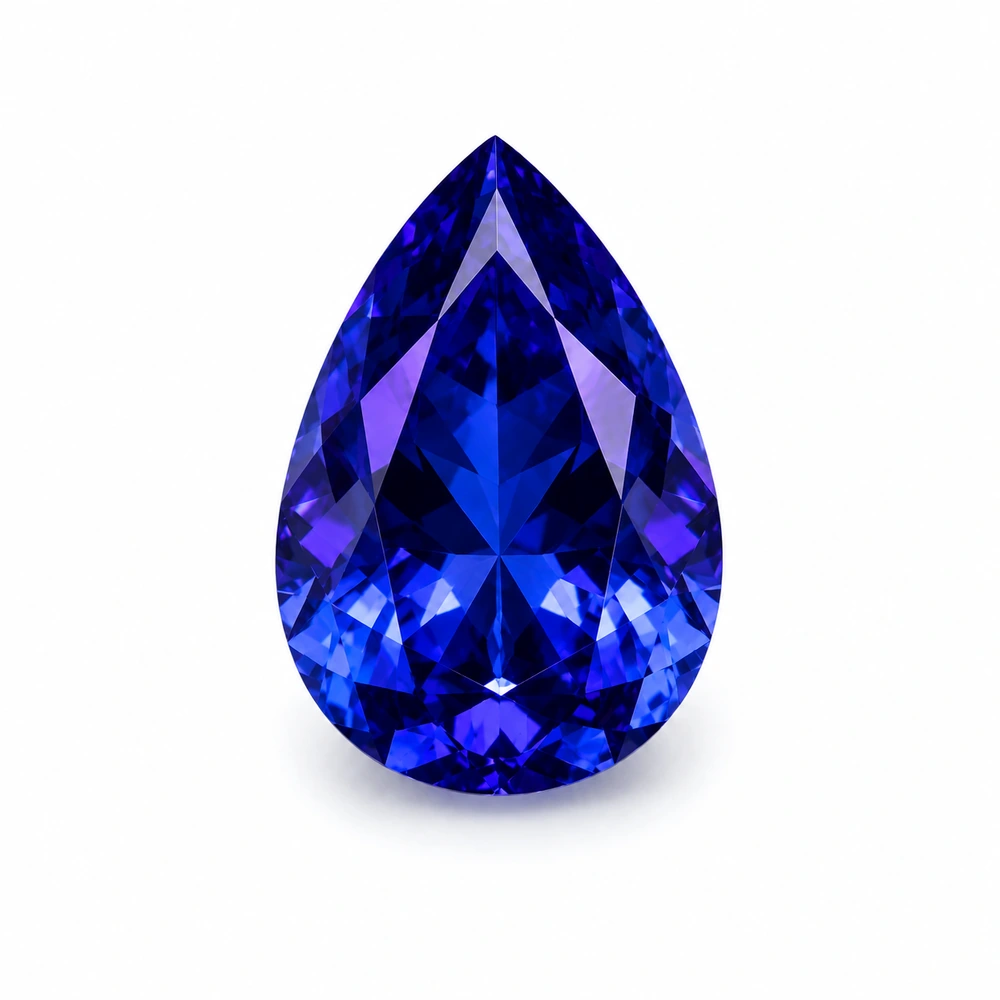
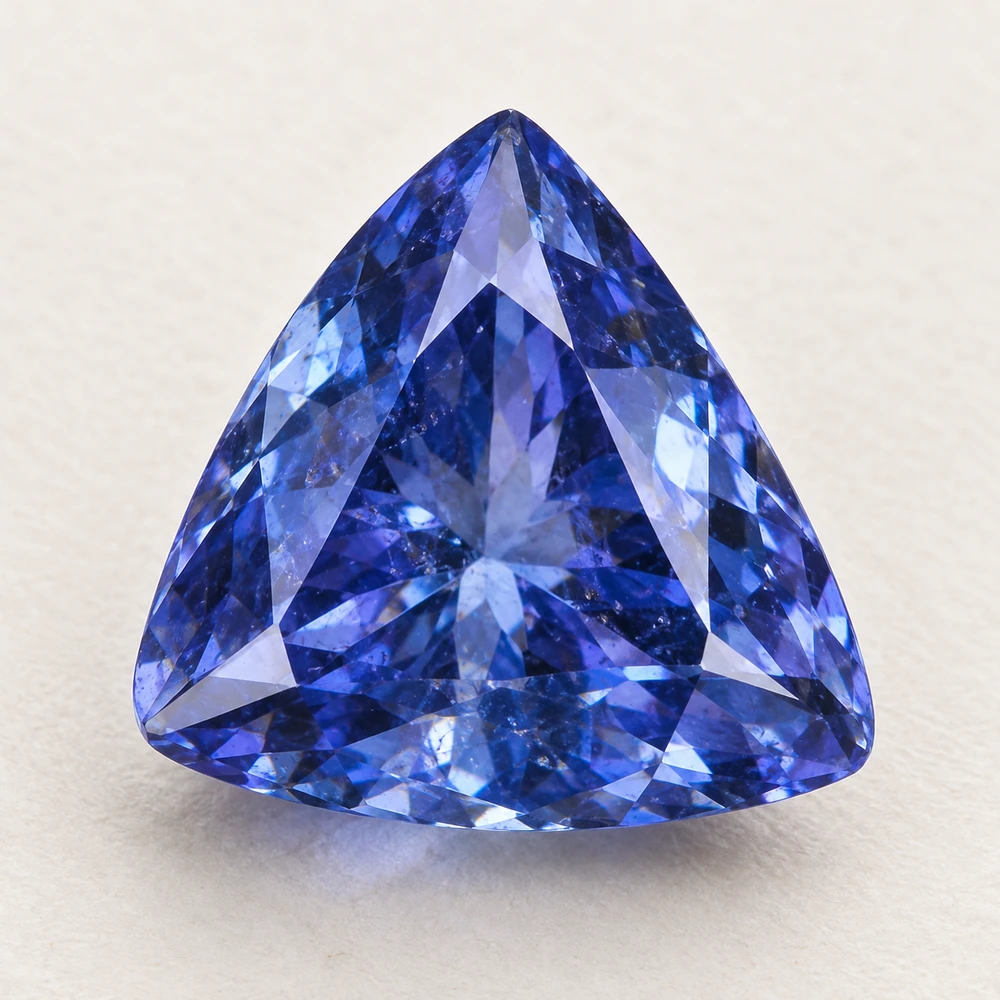
A deep purplish electric-blue study brings the interplay of blue and violet into focus. The illustration does not establish the colour or clarity of an available stone.
Visual reference · not a pictured stock item
Zoisite
Tanzanite
Deep electric blue · Purple-violet
In tanzanite, a deep, purplish electric blue can shift between blue and violet with orientation and lighting. Saturation should retain visible depth and brightness; clarity, cut, condition and treatment disclosure are considered individually.
Collector's note +
The face-up balance of blue and violet should be viewed under more than one light source.
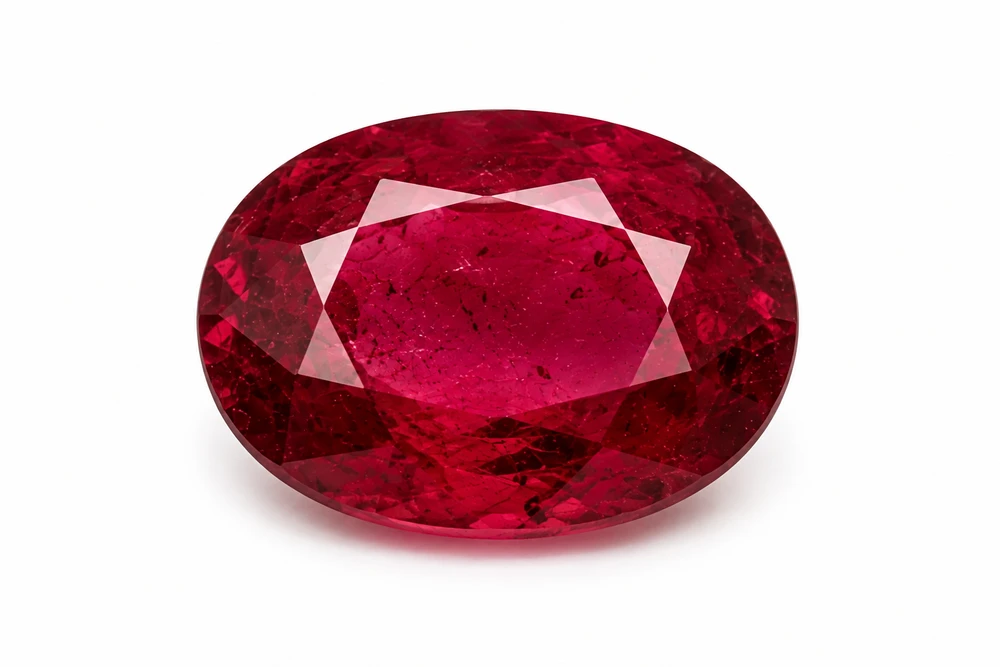
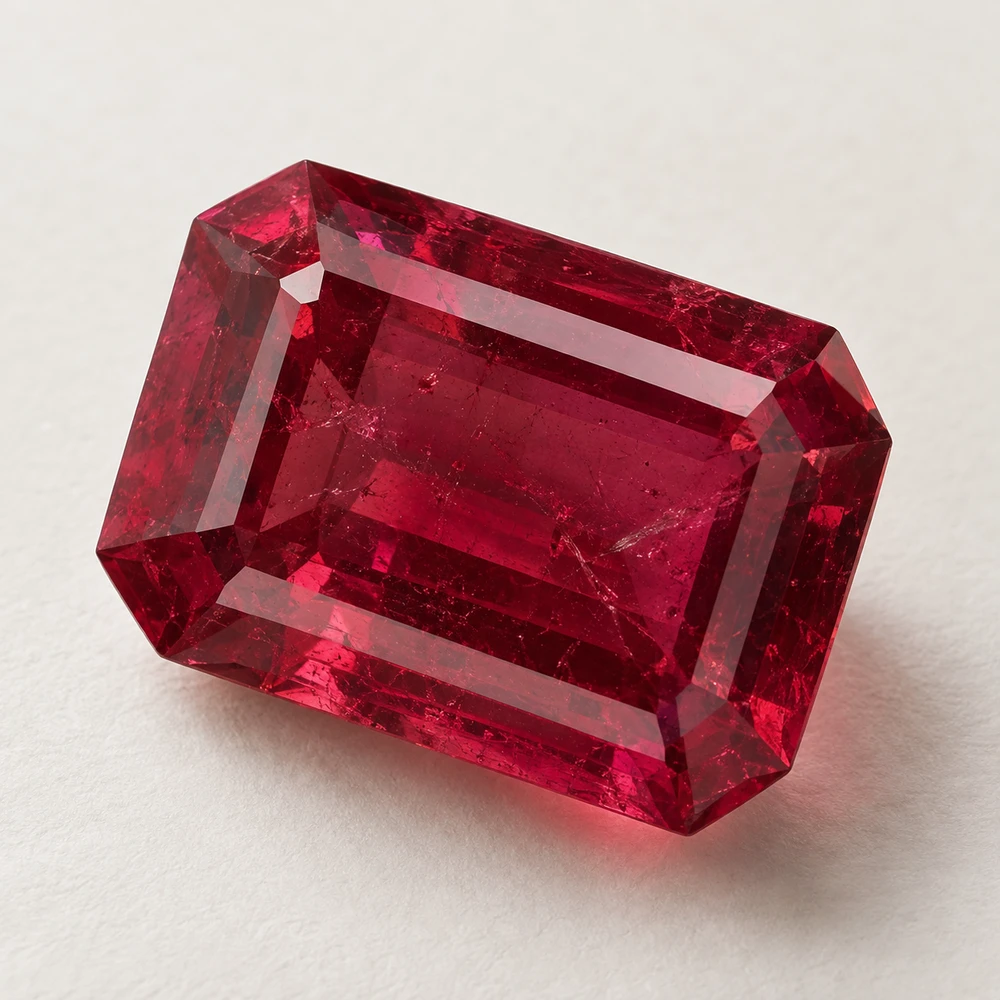
An oval crimson study accompanies the discussion of hue, clarity and treatment disclosure.
Visual reference · not a pictured stock item
Corundum
Ruby
Crimson · Rich red
Ruby may range from bright red to deeper crimson. Assessment should address tone, saturation, clarity, cut, condition and treatment, with origin stated only where supported by documentation.
Collector's note +
Treatment disclosure and the scope of any laboratory report are integral to comparison.
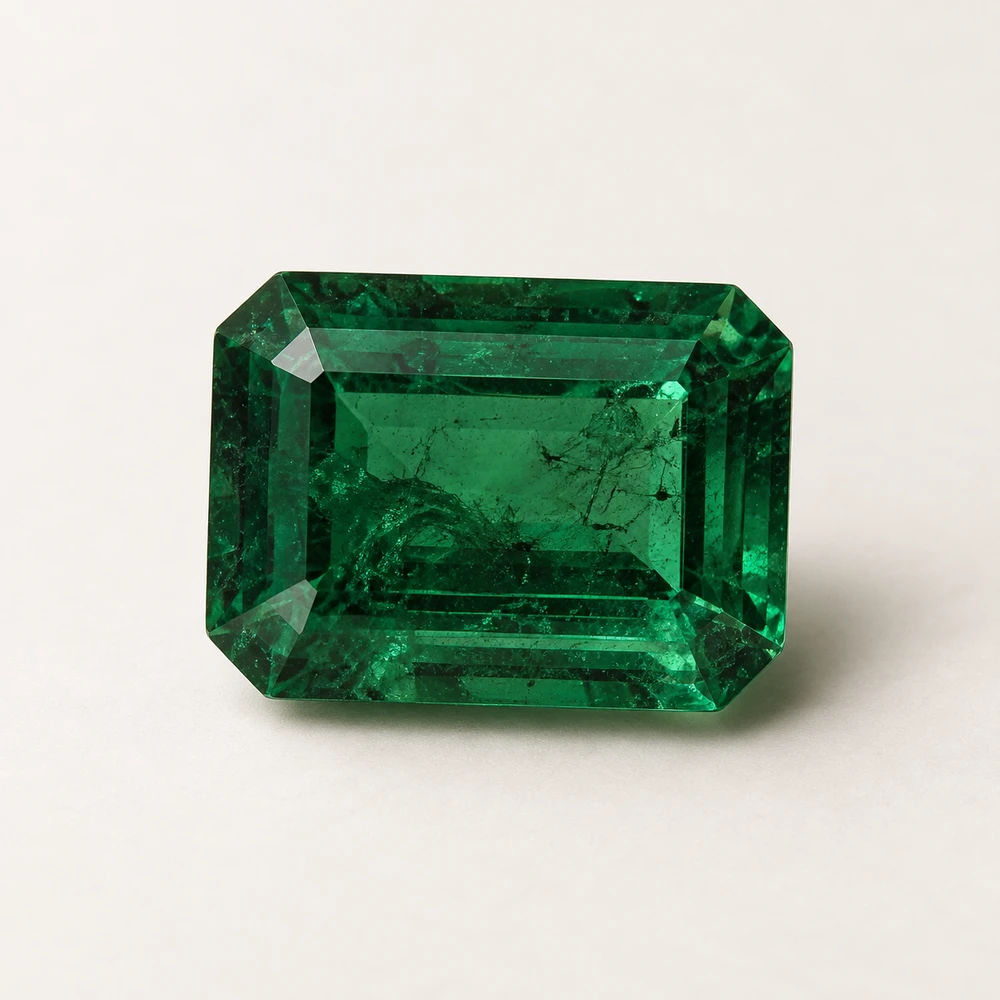
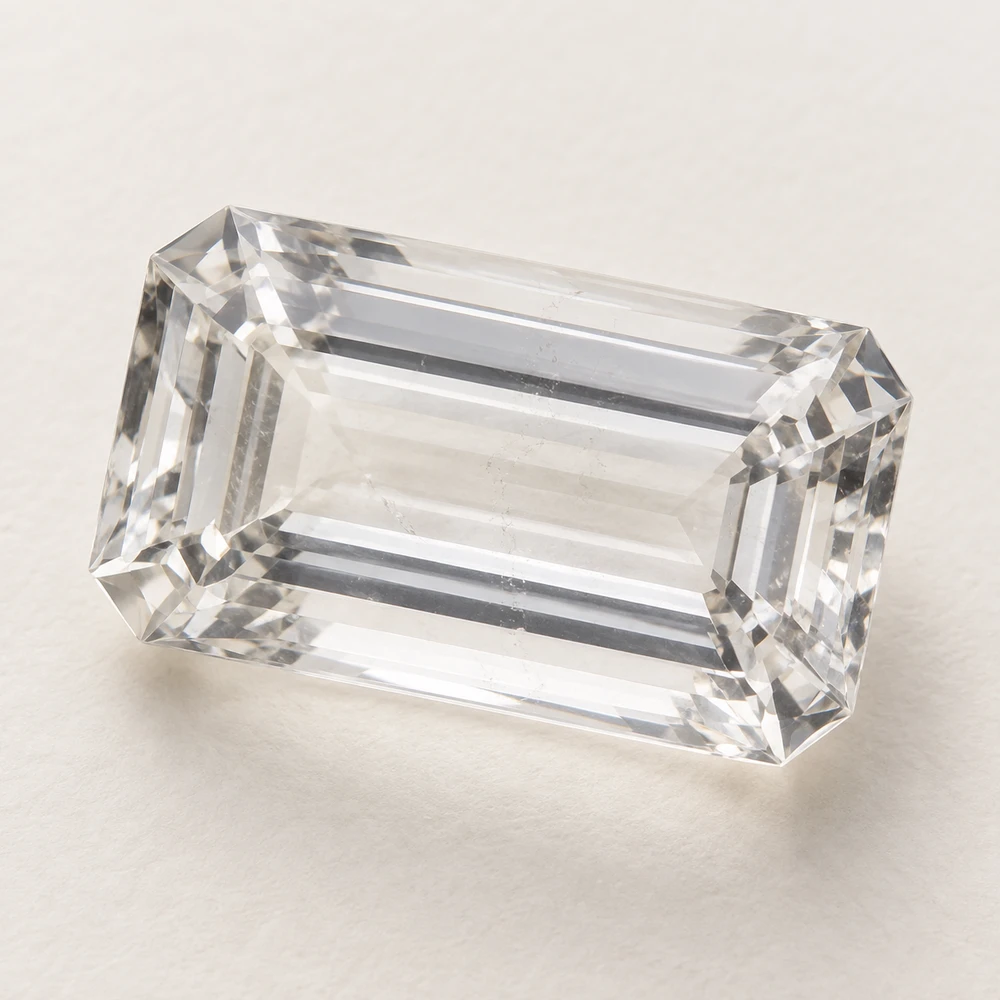
Step-cut geometry and illustrated internal features introduce emerald's individual character.
Visual reference · not a pictured stock item
Beryl
Emerald
Deep green
For emerald, saturation, tone, transparency, inclusions, condition and treatment disclosure should be considered together. Origin is a separate opinion requiring appropriate evidence.
Collector's note +
Clarity enhancement and surface-reaching features should be discussed before setting.
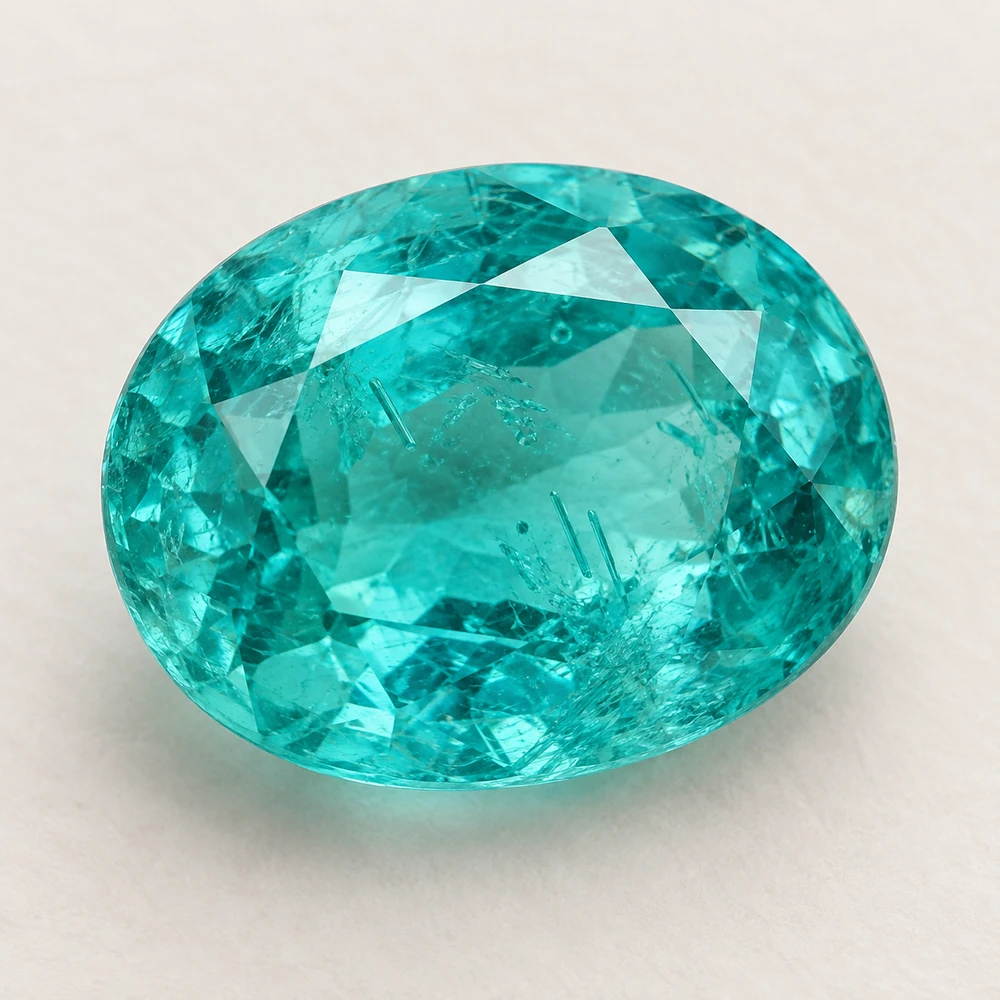
A cyan colour study; copper-bearing identity, treatment and origin cannot be established from an illustration.
Visual reference · not a pictured stock item
Copper-bearing tourmaline
Paraíba Tourmaline
Luminous cyan · Blue green
Copper-bearing tourmaline ranges from cyan to blue-green and, in some material, violet or pink. Laboratory testing supports copper-bearing identity and any opinion concerning geographic origin.
Collector's note +
Colour terminology, treatment and origin should be addressed for the individual stone.
From Namibia's mineral treasures to Madagascar's remarkable variety and the golden greens of Mali, Africa invites a closer look. Here, unusual colours and lesser-known names open a more personal path to collecting.
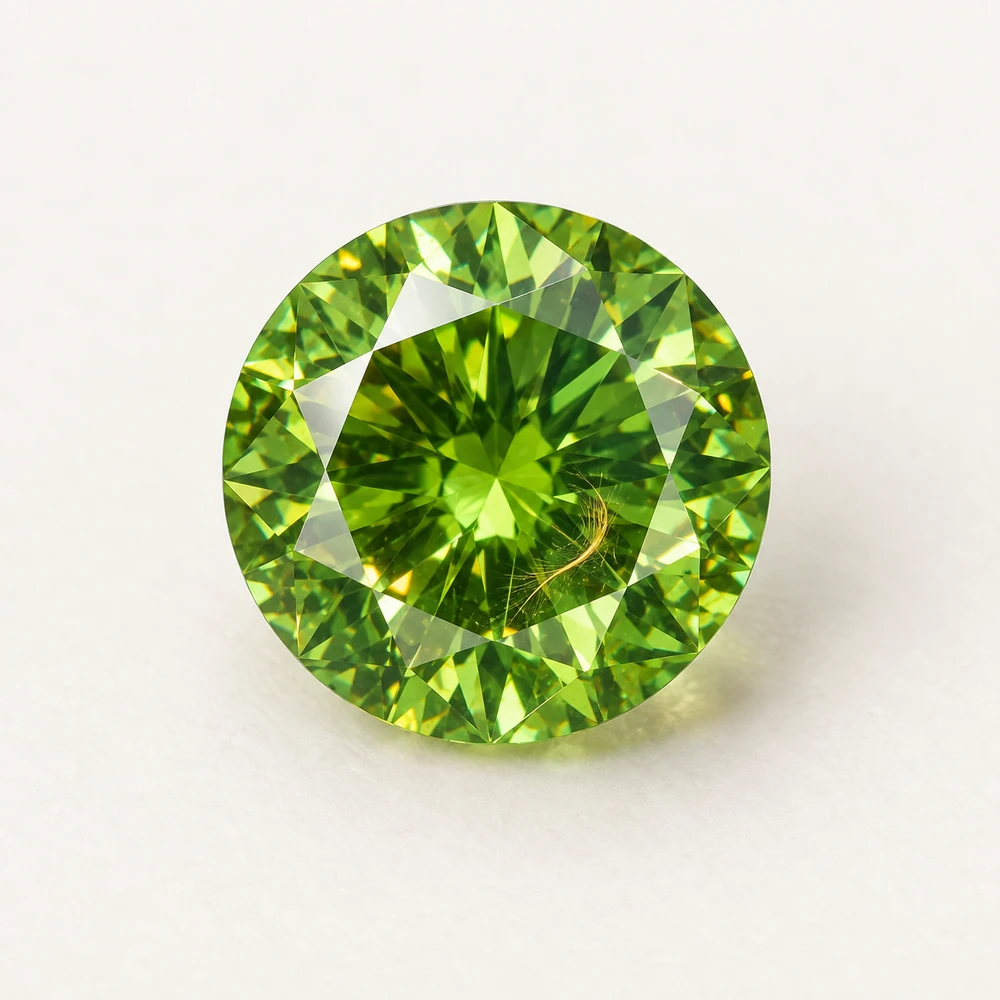
A round green study introduces brightness, dispersion and the importance of examining inclusions individually.
Visual reference · not a pictured stock item
Andradite garnet
Demantoid Garnet
Fresh green · Golden flashes
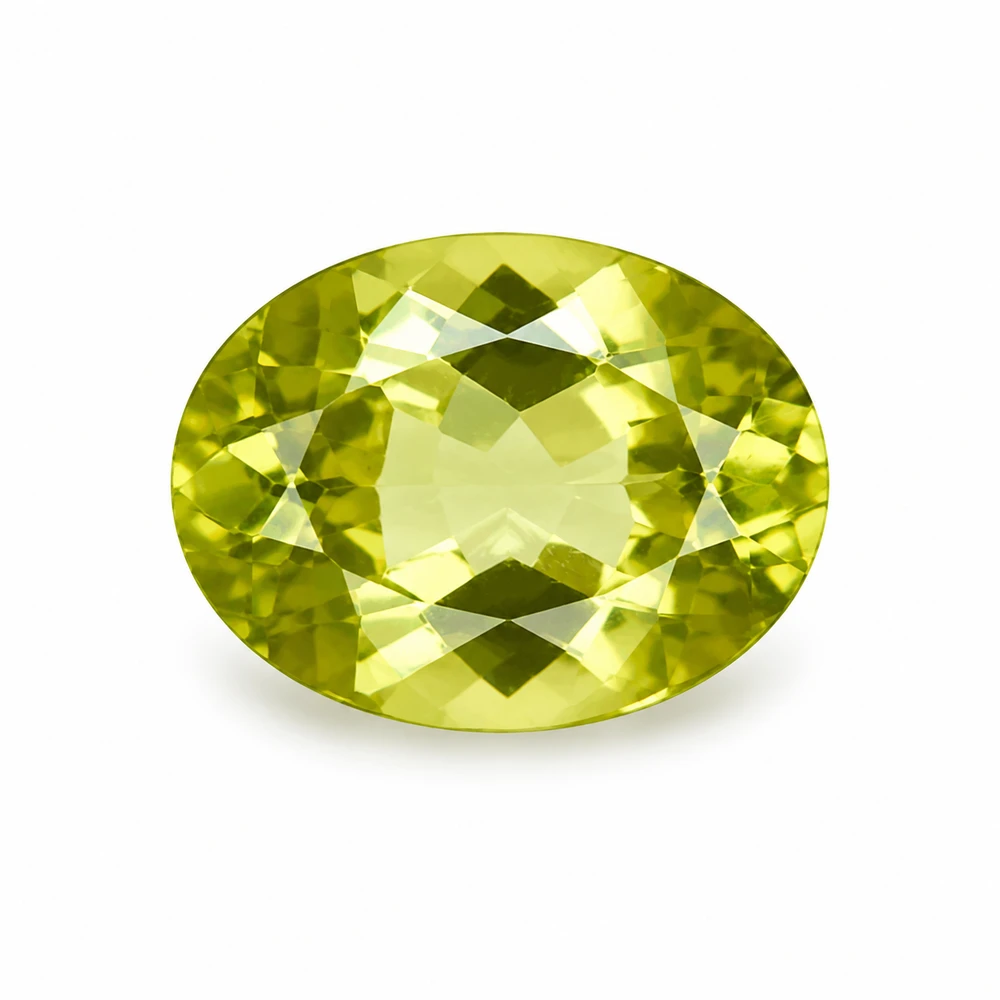
Demantoid is an andradite garnet noted for dispersion. Colour, brightness, clarity, cut and any characteristic inclusions are considered stone by stone.
Collector's note +
Inclusions can support observation but do not by themselves establish geographic origin.
An icy-blue and violet palette reference, not evidence of a specimen's mineral identity.
Visual reference · not a pictured stock item
Aluminium borate
Jeremejevite
Pale blue · Icy violet
Jeremejevite may show delicate pale-blue to violet-blue colour. Transparency, colour distribution, cut, condition and independent identification are central to an informed assessment.
Collector's note +
A specialist collector mineral best considered with precise dimensions and documentation.
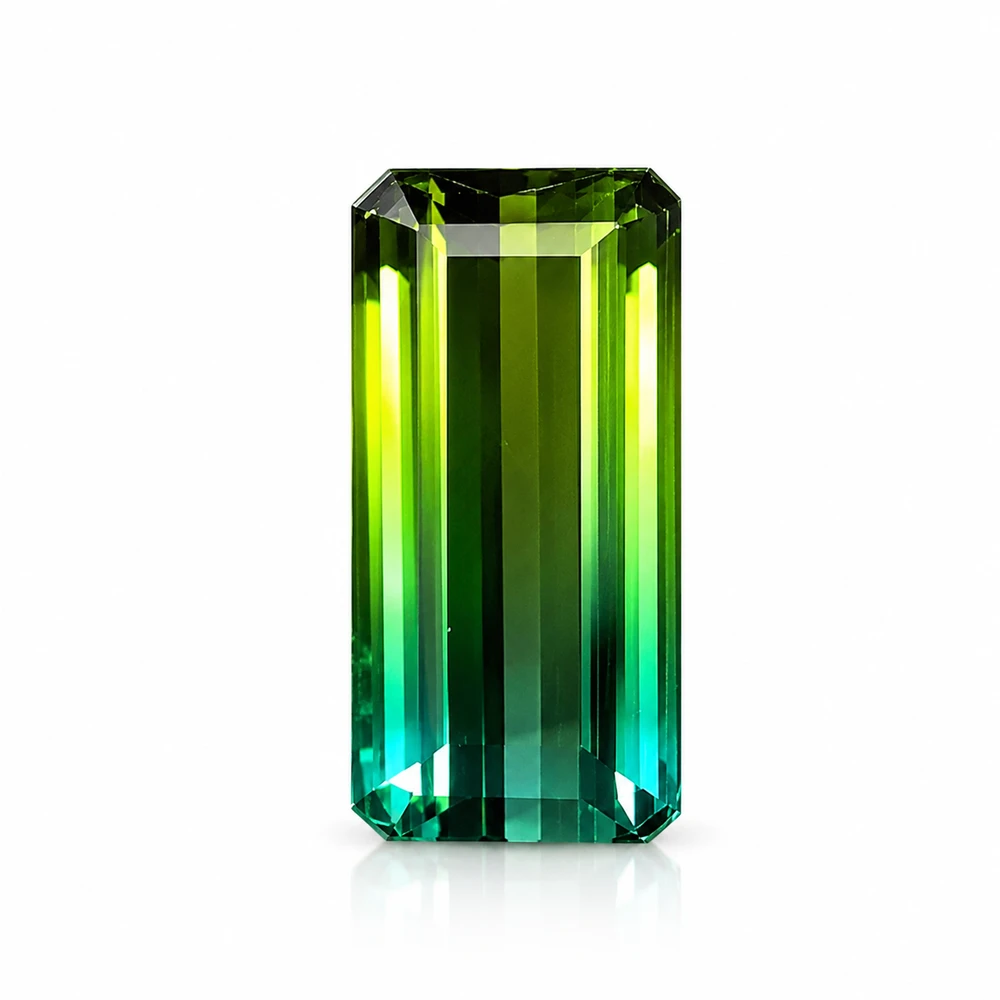
An elongated colour-zoning study introduces how orientation can shape a tourmaline design.
Visual reference · not a pictured stock item
Tourmaline
Rainbow & Bi-colour Tourmaline
Green · Rose · Gold · Blue
Bi-colour and parti-colour tourmaline are shaped around natural colour zoning. Cut orientation, colour boundaries, clarity and durability influence both appearance and setting design.
Collector's note +
The measured outline and colour map can provide a practical starting point for a commission.
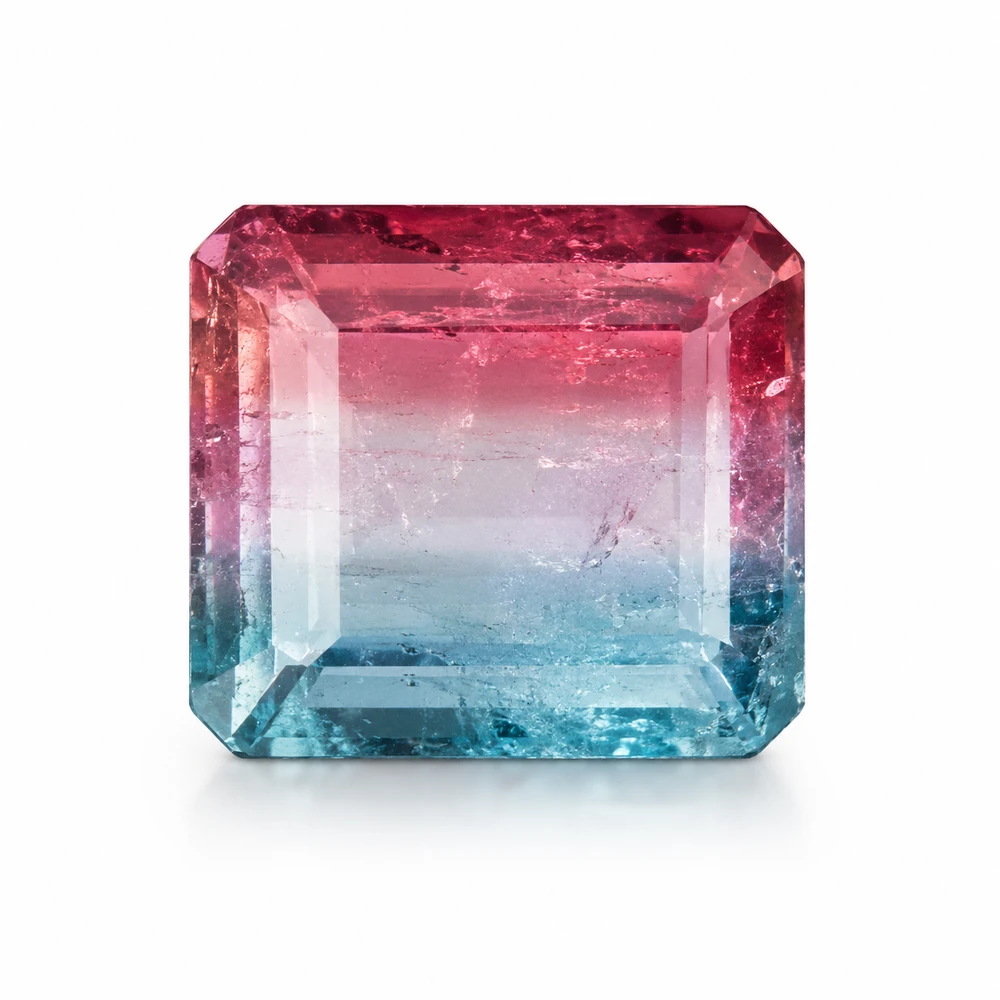
A pink-to-blue palette reference. The image does not demonstrate copper content or any laboratory classification.
Visual reference · not a pictured stock item
Elbaite tourmaline
Cuprian Elbaite
Blue green · Violet · Pink
Cuprian elbaite may range from blue-green to violet and pink. Chemical analysis is required to confirm copper-bearing composition, while treatment and origin are separate questions.
Collector's note +
Copper-bearing tourmaline.
Cuprian describes copper content; composition and any Paraíba designation are confirmed individually.
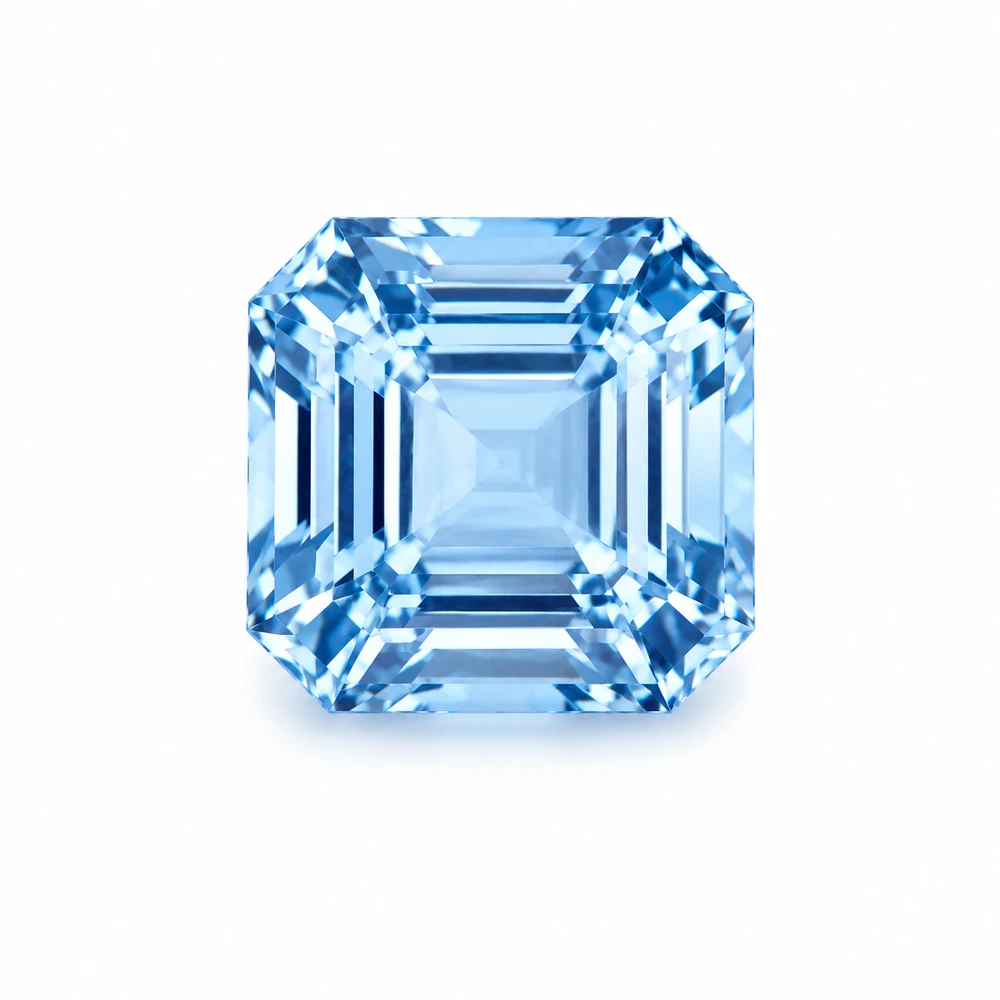
A blue aquamarine palette study, not a claim of Santa Maria mine origin or a particular trade designation.
Visual reference · not a pictured stock item
Beryl
Santa Maria Aquamarine
Deep, clear blue
The Santa Maria colour description refers to a saturated, relatively deep blue in aquamarine. Tone, transparency, cut and treatment disclosure remain part of the individual assessment.
Collector's note +
Santa Maria is used here as a colour ideal; it does not establish a pictured stone's mine origin.
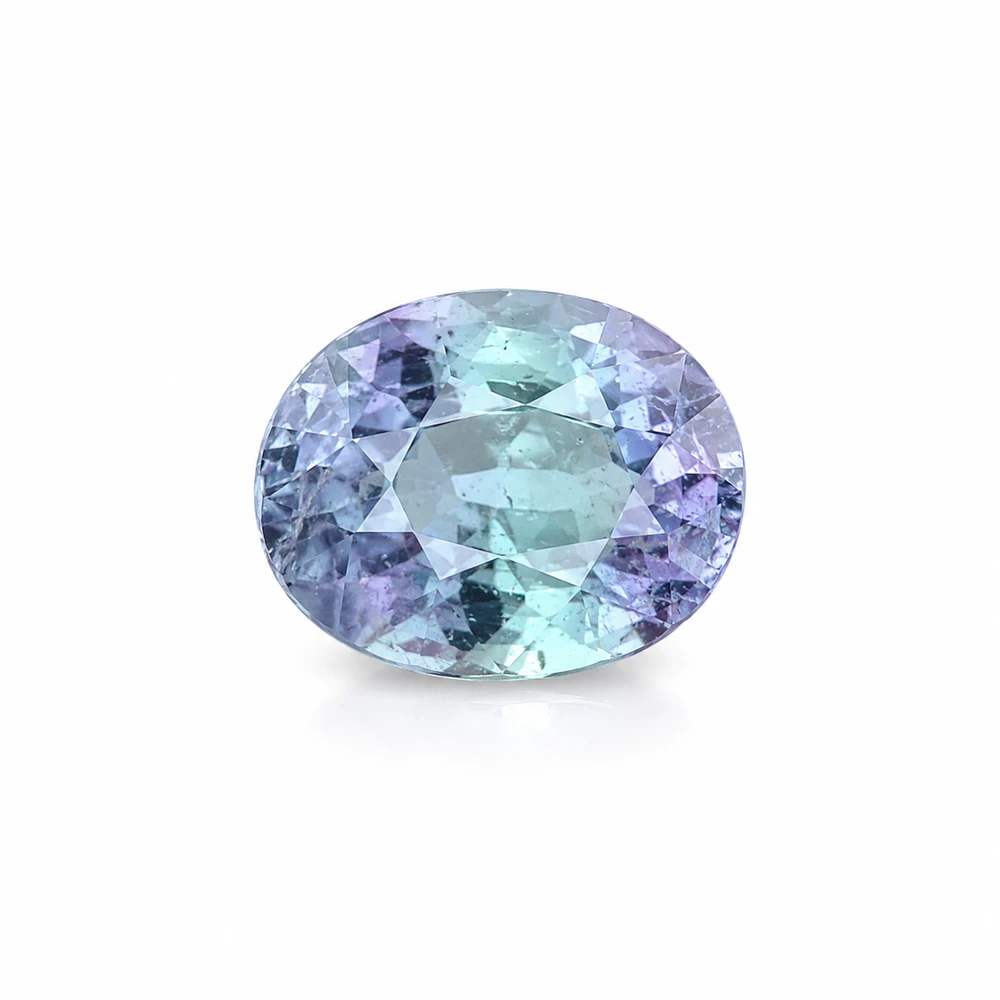
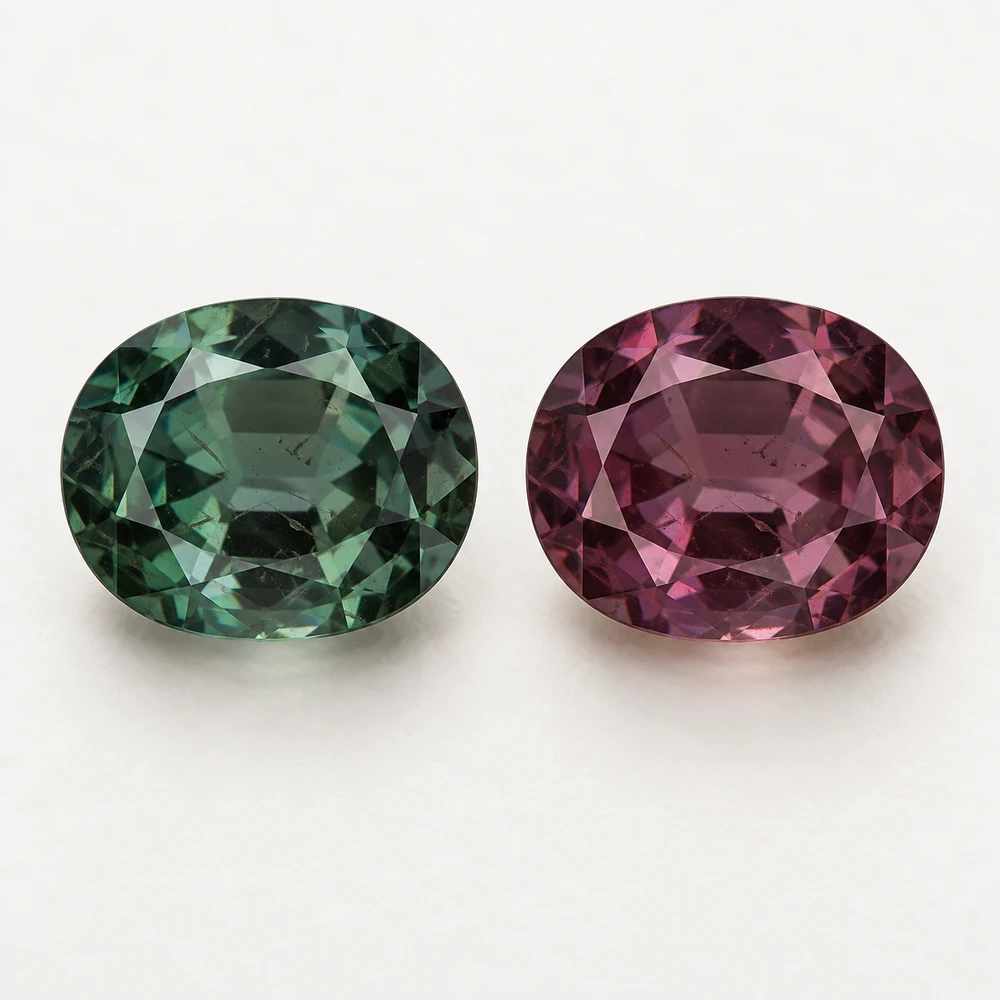
A two-view illustration of the colour-change idea, not measured behaviour of an available stone.
Visual reference · not a pictured stock item
Chrysoberyl
Alexandrite
Green in daylight · Purple under warm light
Alexandrite is assessed under controlled daylight-equivalent and warm-light conditions. The strength and completeness of its colour change are considered alongside tone, clarity, cut and condition.
Collector's note +
A two-view comparison introduces the colour-change effect. An individual stone must be examined under different light sources.
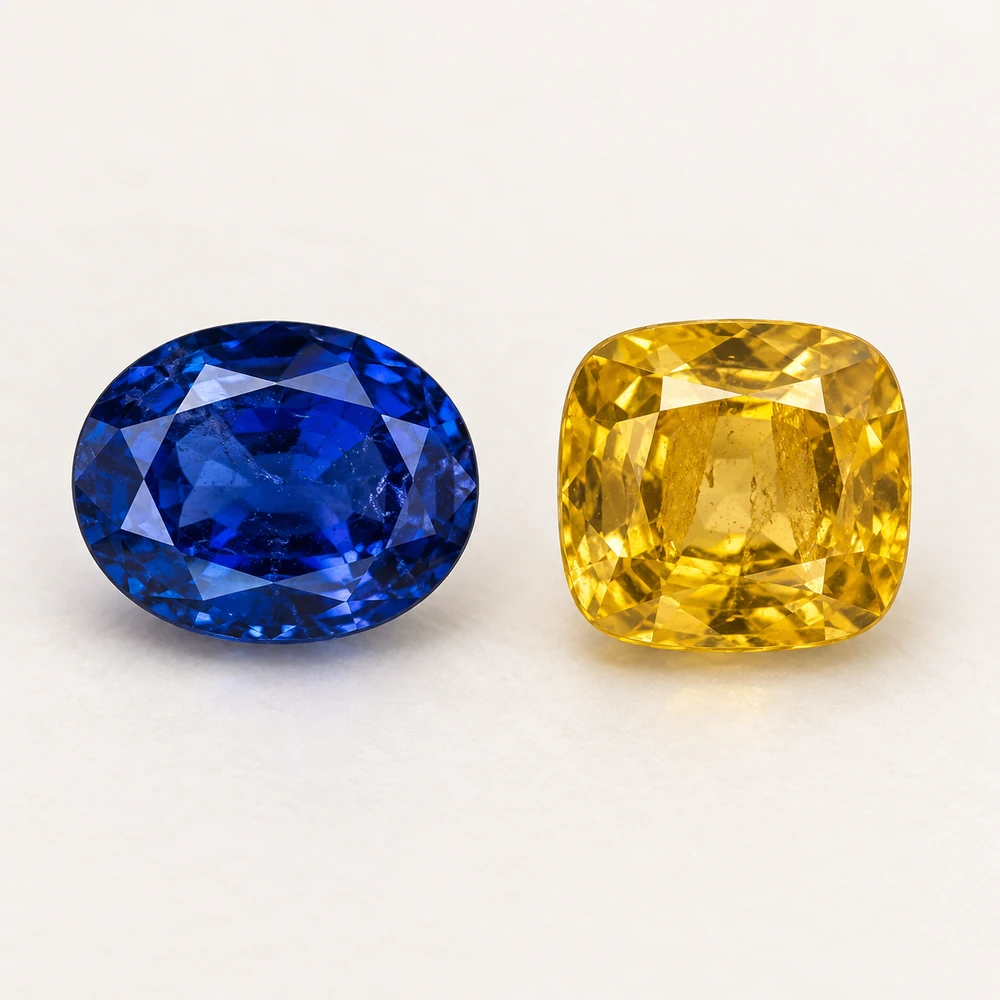
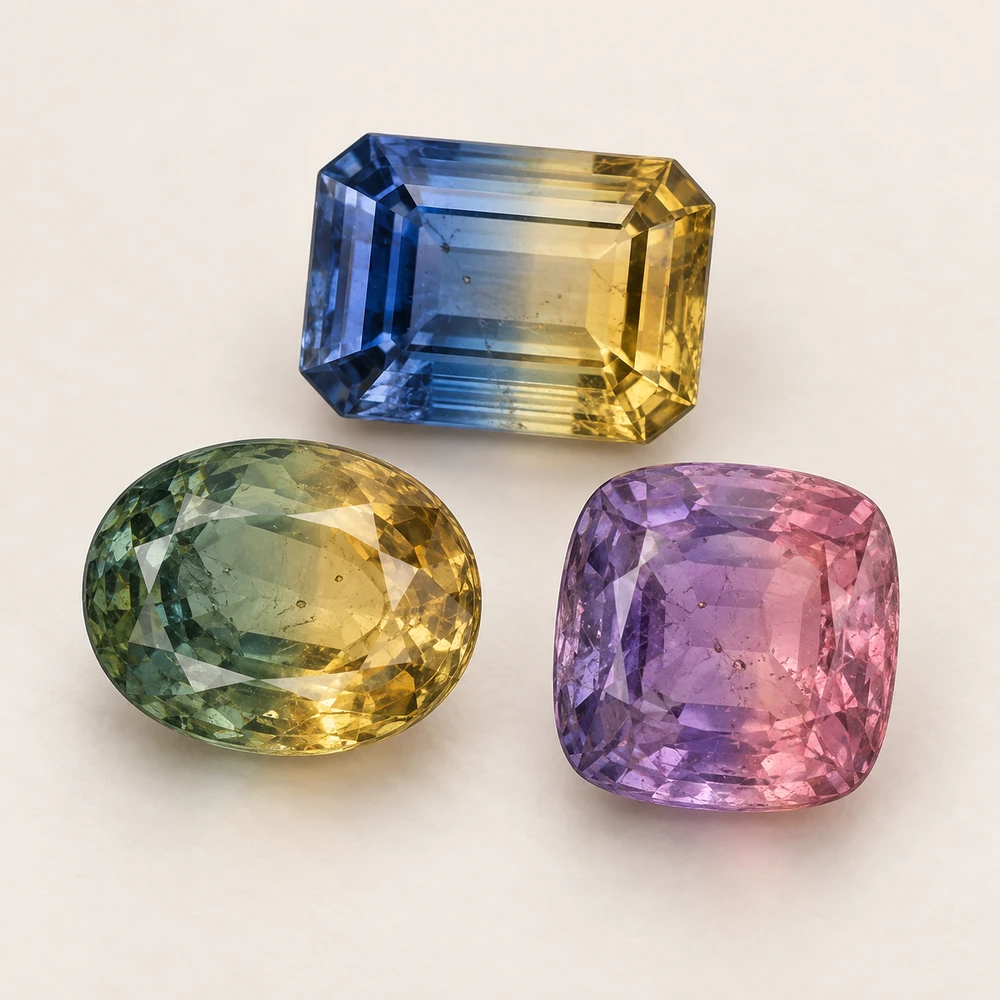
Three outlines illustrate how colour zoning and cut may be considered together.
Visual reference · not a pictured stock item
Corundum
Bi-colour Rarity Sapphire
Blue & yellow · Green & gold · Lavender & pink
Bi-colour sapphire displays distinct colour zones within one crystal. Cut orientation determines how those zones meet face-up and should be reviewed alongside clarity, condition and treatment.
Collector's note +
A measured colour map can help translate the stone's zoning into a setting design.
A triangular blue study introduces the relationship between outline, tone and brightness.
Visual reference · not a pictured stock item
Barium titanium silicate
Benitoite
Cornflower · Violet blue
Benitoite is considered for blue-to-violet hue, dispersion, tone, clarity and cut. The balance matters: excessive depth can obscure the brightness that gives the material its appeal.
Collector's note +
Identification, dimensions and condition should be recorded for an individual collector stone.
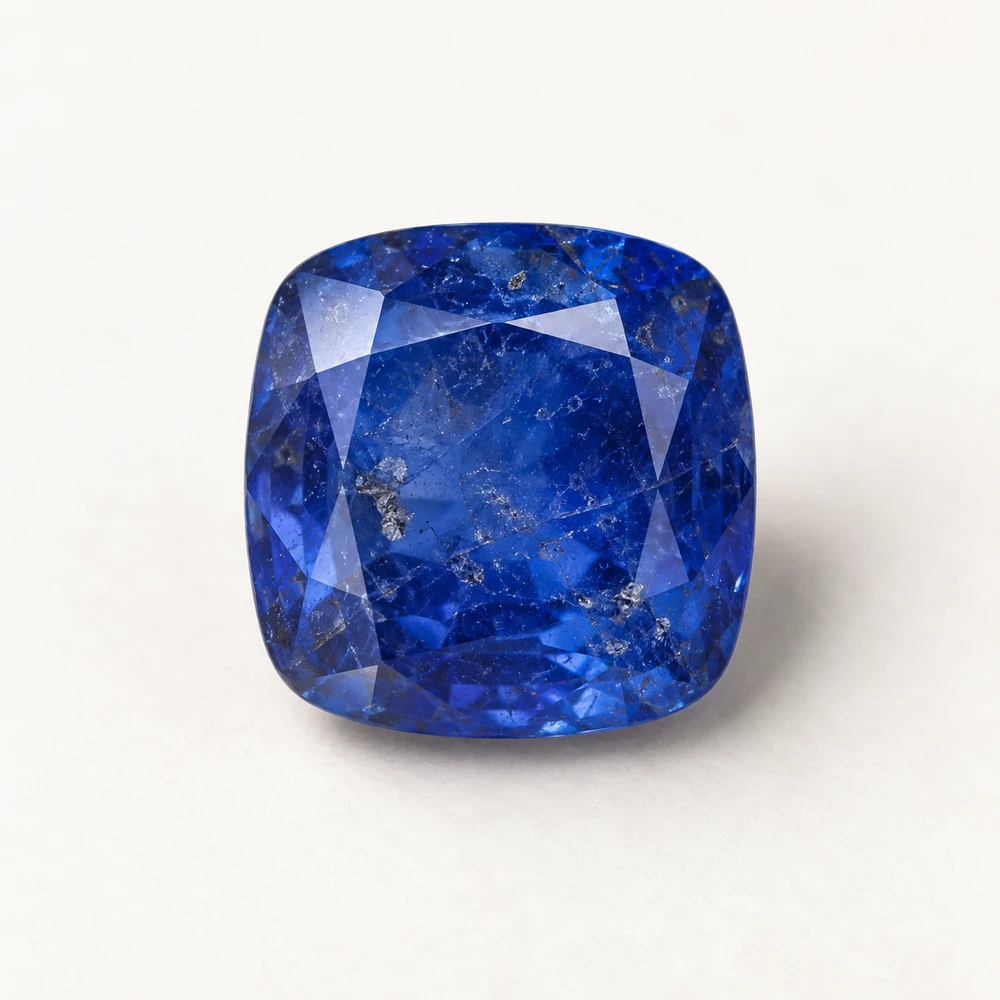
A blue cushion study includes internal features to accompany the discussion of transparency and condition.
Visual reference · not a pictured stock item
Sodalite group
Haüyne
Electric blue
Haüyne is typically seen in small sizes with highly saturated blue colour. Transparency, cut and condition require close inspection, while durability should inform any decision to set the stone.
Collector's note +
Also written hauyne.
Best considered as a collector gem or for a thoughtfully protected setting.
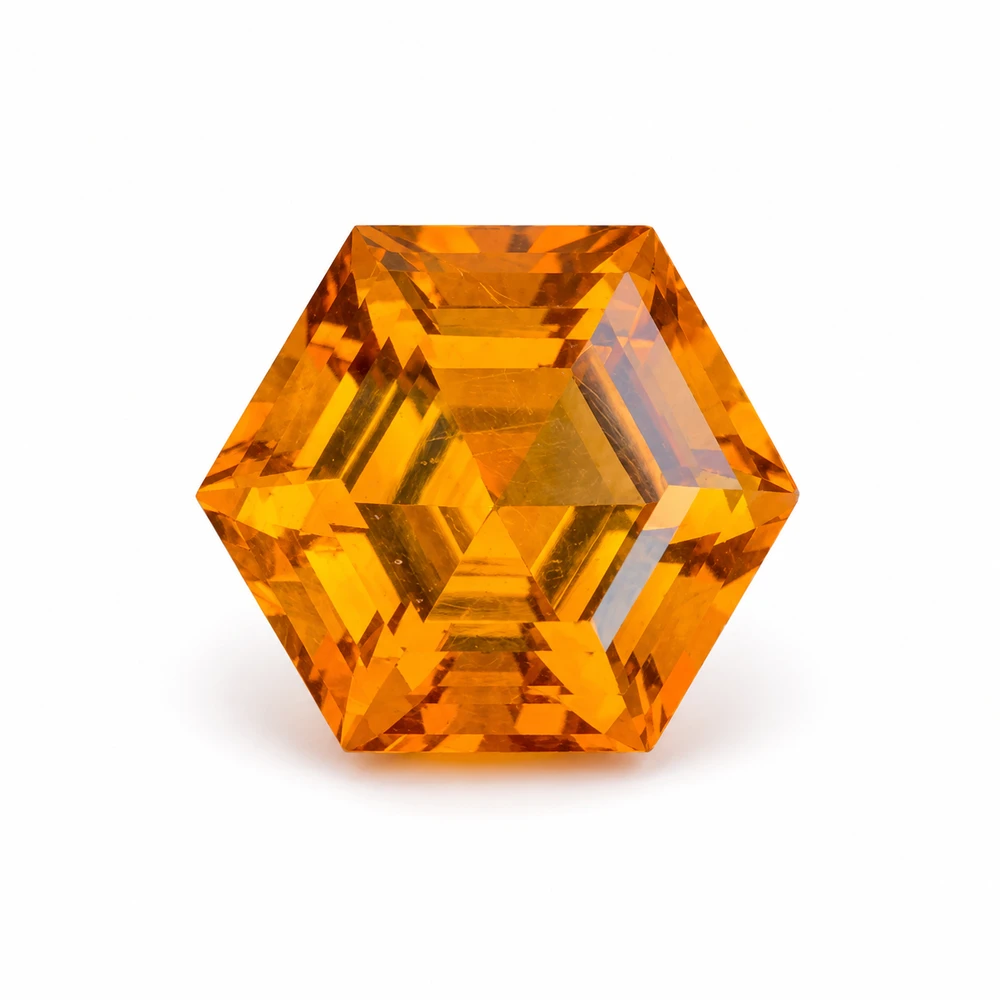
A pink-orange palette reference; an illustration cannot establish treatment status or a trade description.
Visual reference · not a pictured stock item
Topaz
Imperial Topaz
Sherry · Peach · Pink orange
Topaz described in the market as imperial may show sherry, peach, orange or pinkish colour. Tone, saturation, clarity, cut, condition and treatment disclosure are reviewed individually.
Collector's note +
Use of the imperial description is not a laboratory grade and should be considered stone by stone.
From the contrast of black opal to the radiating reflections of tourmaline and the flowing bands of Yamani agate, a selection can begin with pattern as well as colour. These visual references invite individual discussion; identity, treatment, origin and availability are confirmed separately.
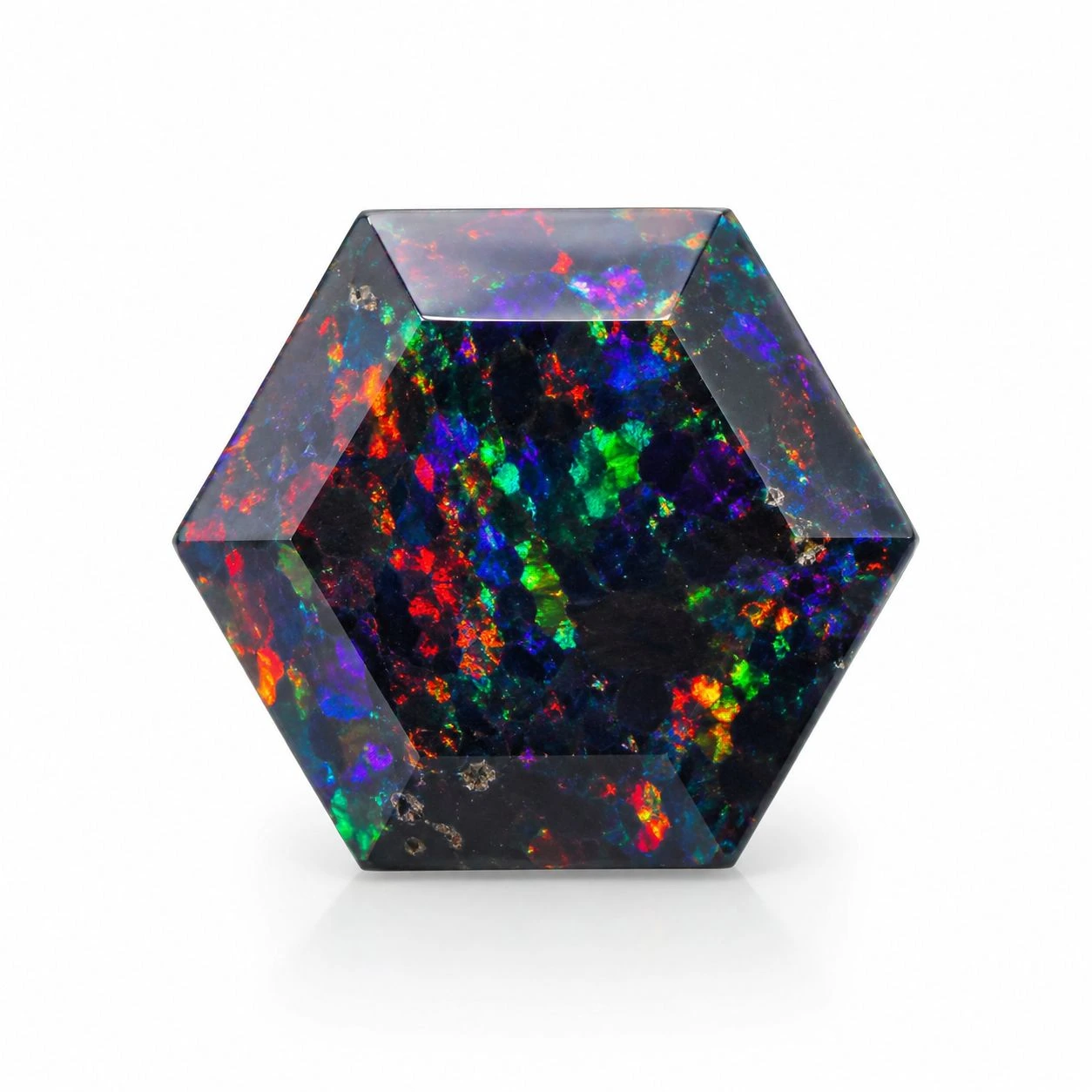
A dark field gives the multicoloured flashes a strong contrast; the broad outline frames their pattern.
Visual reference · not a pictured stock item
Opal
Black Opal
Dark body tone · Multicoloured flashes
A dark ground sets red, green, blue and violet flashes into sharp relief. The broad geometric outline gives this colour pattern a distinct visual rhythm.
Collector's note +
Identity, any treatments, construction and condition are confirmed for the individual stone. The pictured reference is not an offer of available inventory.
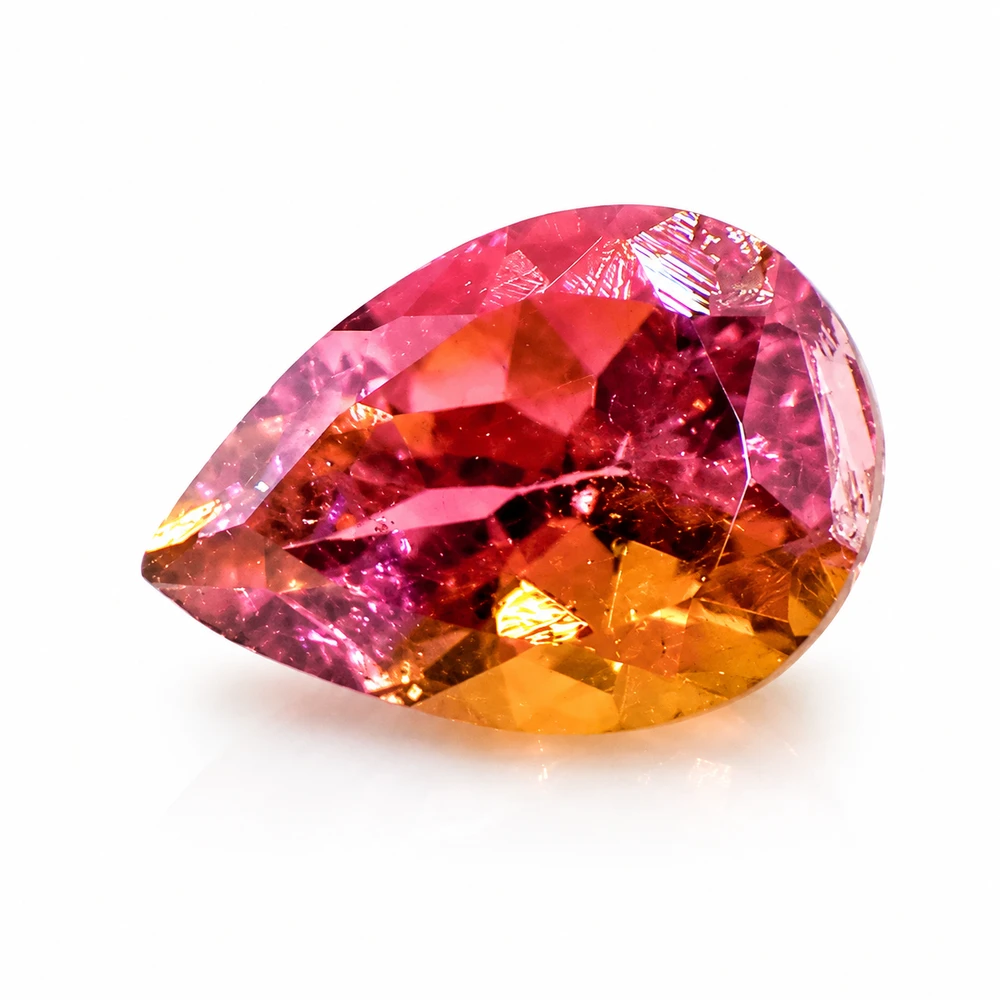
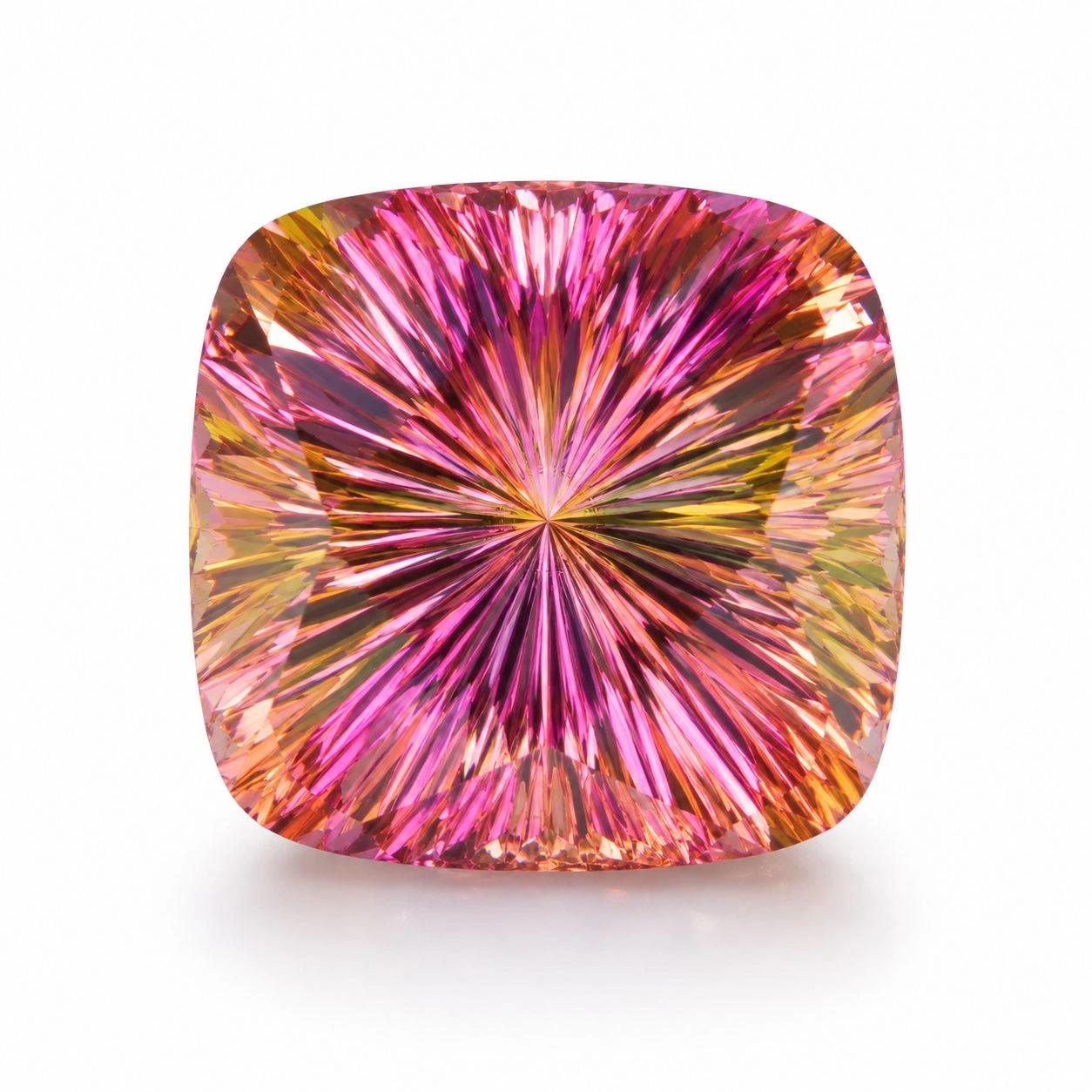
Pink and golden light converge through a radiating cut pattern, introducing an expressive direction for tourmaline.
Visual reference · not a pictured stock item
Tourmaline
Laser-cut Tourmaline
Pink · Golden highlights
Radiating lines draw pink and golden reflections towards a central point. The cut pattern becomes as much a part of the composition as its colour.
Collector's note +
The selection name introduces the visual direction. Cutting method, gemstone identity, treatment and availability require confirmation for an individual stone.
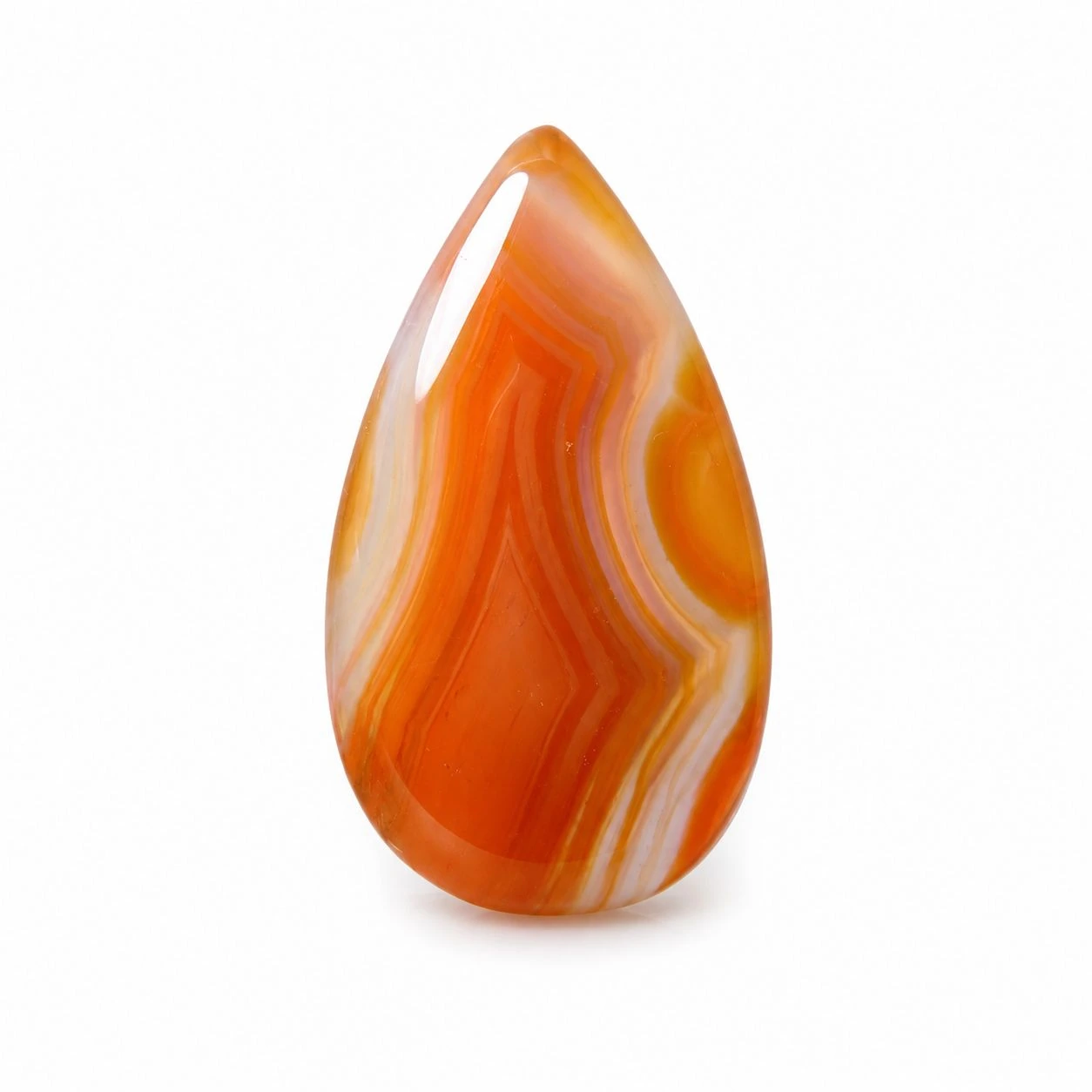
A smooth teardrop follows the alternating bands, allowing pattern and warm colour to lead the composition.
Visual reference · not a pictured stock item
Agate
Yamani Agate
Warm orange · Cream banding
A polished teardrop presents alternating orange and cream bands. Its rounded surface places the emphasis on pattern, flowing lines and the character of colour.
Collector's note +
A regional or trade name alone does not establish origin. Identification, any treatments and provenance are reviewed for the individual stone.
Look beyond hue to the balance of brightness, tone and transparency. These tsavorite and tanzanite illustrations offer a starting point for a colour conversation; actual stones are examined individually under different lighting conditions.
Colour studies · illustrative appearance, not a clarity grade or promise of availability.
Beyond the illustrated selection
Additional gemstone categories for individual enquiry.
From sought-after colour varieties to specialist collector minerals, there is always another direction to explore. These names are invitations to enquire; selections and suitability are considered individually.
A vivid African green. An unusual colour change. A collector's name you have always wanted to encounter. Tell us what draws you in.
02 / A considered selection
Character in every detail
Colour, cut, dimensions and individual gemological characteristics shape the discussion. Some stones belong in a daily jewel; others deserve a protected setting or a collector's cabinet.
03 / The jewel to come
From loose stone to personal creation
Explore an individual gem, a complementary pair or the centrepiece of a bespoke jewel. The next chapter is shaped around you.
Nature of colour
A palette beyond the cabinet.
Water, foliage and flower colour provide an editorial counterpoint to cut stones. The sequence connects colours through an edit, not through a claim that a natural scene documents the source of a gemstone.
Nature and gemstone colour · a visual association, not an origin record.
African heritage · International curiosity
The next discovery could be yours.
Whether your interest begins with a celebrated classic or a name few have heard, we welcome the conversation.